A family may choose cremation quickly, then realize a second decision still needs to be made – how do we gather, remember, and honor this person well? That is usually where the question comes up: what is a cremation memorial service, and how is it different from a funeral?
A cremation memorial service is a ceremony held to honor someone who has been cremated. Unlike a traditional funeral, the body is not present in a casket. The service may take place after the cremation has already happened, and it can be held in many settings, including a funeral home, church, event space, graveside location, family home, park, or other meaningful place. For many families, it offers more flexibility with timing, location, and overall cost while still creating a respectful moment to gather.
What Is a Cremation Memorial Service and How Does It Work?
In simple terms, a cremation memorial service is the remembrance ceremony, while cremation is the method of disposition. Those are two separate parts of the overall plan. Cremation addresses what happens to the body. The memorial service addresses how family and friends come together to grieve, reflect, pray, speak, and celebrate a life.
The service can be formal or informal. Some families want clergy, music, readings, and a structured program. Others prefer a more personal gathering with shared stories, photos, and favorite songs. An urn may be present, but it does not have to be. In some cases, the ashes are buried, scattered, or placed in a niche at a later time. In other cases, that committal happens as part of the memorial itself.
This flexibility is one of the main reasons families choose this option. When relatives are traveling, schedules are difficult, or emotions are still very raw, holding a memorial after cremation can give everyone more time to plan something meaningful.
How It Differs From a Traditional Funeral
The biggest difference is timing and physical presence. A traditional funeral often takes place before burial or cremation, with the body present. A cremation memorial service usually happens after cremation, so there is no casketed body at the ceremony.
That difference affects more than appearance. It can change the pace of planning, the location options, and the total expense. Without the time pressure of scheduling a service before final disposition, families may have more room to coordinate travel, customize the program, or spread out decisions over several days.
Still, there can be overlap. A memorial service can include many of the same elements as a funeral, including eulogies, prayers, military honors, slideshows, flowers, and printed programs. The emotional purpose is often the same. The format is what changes.
When a Cremation Memorial Service Takes Place
There is no single timeline. Some families hold the service within a few days of the death. Others wait a week or two. Some wait longer if they are planning a larger event or coordinating with distant relatives.
A later date can be especially helpful when death comes unexpectedly and people need time to make arrangements, notify extended family, or secure funds. It may also make sense when the family wants the memorial on a birthday, anniversary, holiday weekend, or another meaningful date.
The trade-off is that waiting too long can make planning harder for some families. People return to work, travel becomes more difficult, and momentum fades. What feels manageable depends on the family, their traditions, and the emotional circumstances.
What Happens During the Service
Most cremation memorial services include a few core elements, even when the tone is simple and personal. There is usually an opening welcome, time for remembrance, and some form of closing reflection. Between those moments, families often include music, readings, prayers, eulogies, a video tribute, or an open sharing time.
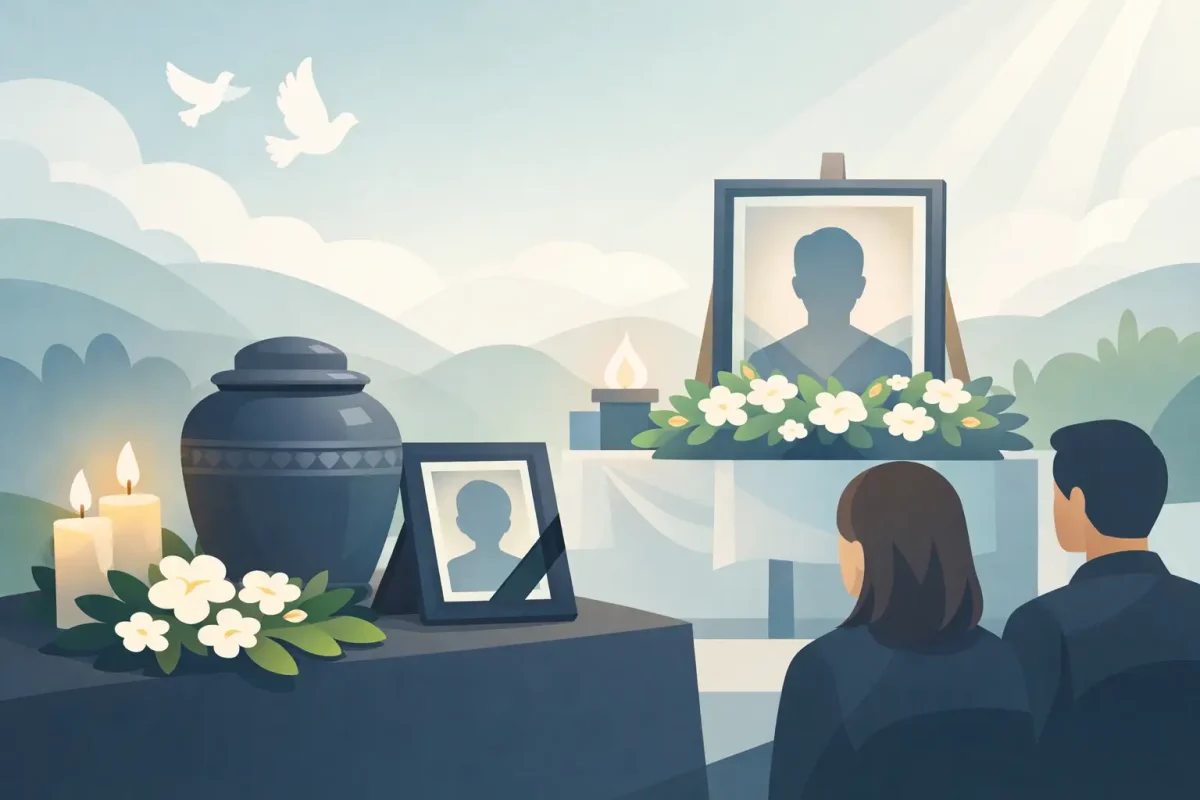
If the gathering is religious, the order may follow the customs of that faith community. If it is secular, the service may focus more on storytelling and personal memories. Some families place the urn at the front of the room with framed photos, flowers, candles, or keepsakes. Others prefer not to display the urn at all.
There is no rule that says the service must be solemn from beginning to end. Many families want a respectful tone with moments of warmth, humor, and gratitude. That can feel more authentic, especially when the person being honored was known for energy, laughter, or strong family traditions.
Common Options Families Can Choose
Because cremation memorial services are flexible, families can shape them around what matters most. That might include a formal ceremony led by a funeral director or clergy member. It might be a church service followed by a reception. It might be a private family gathering with a later public celebration of life.
Some families also include a final placement of the ashes. That may involve burial in a cemetery, placement in a mausoleum or columbarium, or a scattering ceremony where permitted. Others separate the memorial and the ash disposition into two different events.
This is often where practical decisions start to affect cost. Venue rental, clergy honorariums, printed materials, catering, flowers, cremation urns, transportation, and cemetery fees can all be part of the total. A service can be modest, but it is rarely free once all pieces are added together.
What Is Included in the Cost?
When families ask about cremation pricing, they sometimes assume the memorial service is automatically part of the cremation package. Often, it is not. Direct cremation usually refers only to the cremation itself, with minimal services. The memorial ceremony is usually a separate expense.
The total cost depends on what is being arranged. A basic gathering at home may be relatively affordable. A full service at a funeral home or church with staff, printed programs, audiovisual support, floral arrangements, and a catered reception will cost more. If there is burial of ashes, a headstone, cemetery opening and closing fees, or a niche purchase, those are additional items.
This is where families can feel caught off guard. They may choose cremation thinking it solves the financial side, then discover there are still meaningful service costs to cover right away. When payment is due before insurance proceeds arrive or before relatives can contribute, financing can ease that pressure and give the family room to plan the service they want.
Is a Cremation Memorial Service Right for Every Family?
Not always. For some families, a traditional funeral with viewing feels more consistent with their faith, culture, or emotional needs. Seeing the body can matter deeply in the grieving process. For others, cremation followed by a memorial feels more manageable, more affordable, or simply more in line with the wishes of the person who died.
There is also a middle ground. Some families choose a viewing before cremation, then hold a memorial later. Others hold a small immediate service and a larger celebration of life months afterward. The right choice depends on budget, beliefs, timing, family dynamics, and what will feel most healing.
If cost is part of the decision, it helps to ask for an itemized breakdown early. That makes it easier to compare options and avoid agreeing to more than the family can comfortably afford. It also helps protect the service itself from rushed financial decisions made during grief.
Planning Without Added Financial Stress
When arrangements have to be made quickly, families often do not have time to wait for life insurance, estate funds, or help from relatives. Yet funeral homes, cremation providers, cemeteries, and memorial vendors may require payment upfront. That gap creates stress at the exact moment when people are trying to focus on honoring someone they love.
A cremation memorial service should not have to be scaled back simply because funds are delayed. For families facing immediate costs, specialized funeral financing can help cover cremation, memorial services, cemetery expenses, ash scattering, headstones, and other end-of-life needs with affordable monthly payments. Services such as Memorial Funding are built for these situations, with fast approvals and quick access to funds when timing matters.
Questions to Ask Before You Schedule
Before setting the date, it helps to clarify a few practical points with the provider. Ask what is included in the cremation fee, whether the memorial is a separate charge, whether staff and facilities are included, and what deadlines apply for payment. If ashes will be present, confirm when the urn will be available. If burial or scattering is planned, ask about permits, cemetery fees, and location rules.
These details may seem small, but they affect both the budget and the experience. Clear answers can prevent last-minute surprises and give the family more confidence in the plan.
A cremation memorial service is, at its heart, a chance to gather with intention after cremation has taken place. It can be simple or elaborate, traditional or highly personal, immediate or delayed. What matters most is that it gives people a real moment to remember, support each other, and say goodbye in a way that feels right for the life being honored.